
The Vacant Generation
Boomer-bashing is back on the menu this week all over the internet. Tragically, "selfish" barely scratches the surface.

Baby boomers, born between 1946 and 1964, occupy a peculiar place in American history, often cast as the villains in a narrative of national decline. The charge leveled against them—selfishness—feels too simplistic, a surface-level barb that doesn’t quite capture the depth of their pathology. It’s not just greed or ego; it’s a profound vacancy, a generational absence of belief in anything beyond the self. This hollowness, more than any single act, defines their legacy and explains why so many of their children, myself included, wrestle with a mix of love and disillusionment when we look at them.

What forged this generation of meaningless men? That question is too vast for this piece, but the symptoms are stark. Boomers once proudly declared, “I am a capitalist,” as if it were a creed, a faith, an identity. Two decades ago, you’d hear it daily from those who didn’t toil with their hands—a mantra mistaken for philosophy, a religion without transcendence, a banner without a nation. Capitalism isn’t a homeland; it’s a mechanism. Yet for boomers, it became a shallow substitute for meaning, a way to fill the void where deeper convictions might have resided.
They speak, too, of cowering under desks, trembling at the specter of Soviet annihilation. They offer this with earnestness to younger generations who grew up navigating school shootings, terrorist attacks, hormonal collapse, and a world of unfamiliar faces. The boomers’ fear, real or exaggerated, feels quaint by comparison, a relic of a simpler dread. Their nostalgia for their own anxieties reveals a disconnect, a failure to grasp the weight of what came after and because of them.
Religiosity exposes the fissure most brutally. Their parents, the Silent Generation, clung to faith—80% identified as Christian, with half attending church regularly. Boomers, by contrast, saw church attendance plummet to half that, even as 72% still claimed the Christian label. This is peak boomer: adopting the veneer of identity without its substance, mouthing the words while abandoning the practice. They wear belief like a costume, discarded when inconvenient.
Curiosity, skepticism, the thirst for knowledge—hallmarks of the American spirit—withered under their watch. Boomers were the first generation to forsake self-education, content to consume truth as filtered through newspapers or Tom Brokaw’s soothing baritone. They didn’t seek; they received. Truth became what the screen told them, a passive acceptance that left them unmoored from any deeper grounding.
Vietnam looms large in their story, a shadow of cowardice. Only 8% of draft-eligible boomers served, and while many were too young or escaped the draft’s net, millions let others take their place. They dodged not just war but the moral weight of choice, leaving a legacy of evasion. Meanwhile, their rebellion—“fuck the man”—rings hollow now, as they kneel more slavishly to power than any generation before them. The irony stings.
What about the catastrophe of feminism and “civil rights?” Boomers didn’t pass the Civil Rights Act, but their women and many of their men stretched its framework to encompass women and all of the other unfortunates, reshaping society in ways that we now recognize as entirely negative. They romanticize their struggles, insisting their lives were hard, despite data showing otherwise. The “work hard” mantra, wielded like a cudgel, feels like a lecture from a generation that coasted on unprecedented prosperity.
And then there’s Social Security / Medicare. “I’ll never get it,” they moaned all their lives, decade after decade, only to be the last generation to fully collect its benefits. A neat trick: predict sacrifice, dodge making it, and profit anyway. This pattern—consuming, hollowing out, then deflecting—defines them. They devoured the nation’s resources, gutted its institutions, and now buy their children houses, not out of generosity but guilt and necessity. It’s a transaction, not a gift, a way to extend control, demand gratitude, and absolve them of destroying our society. In many cases they literally got rich at the expense of their children’s future.
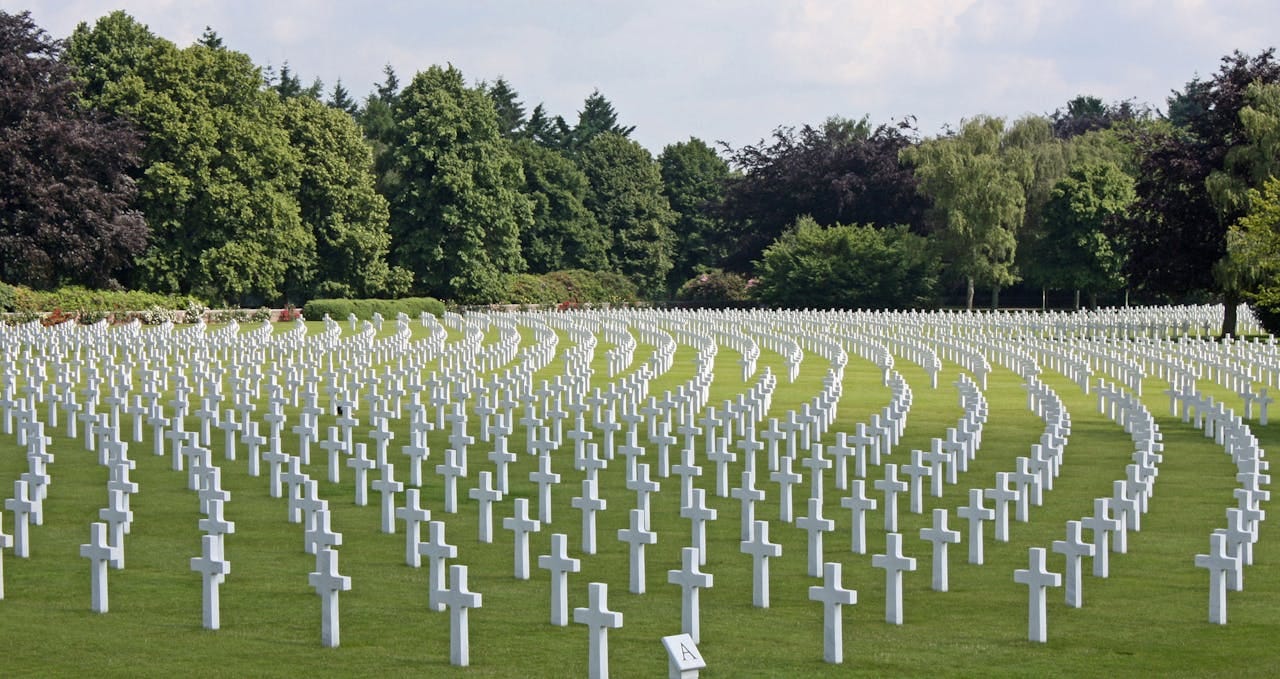
The other day I strolled through a cemetery, and I saw “patriot” etched on countless headstones of earlier generations. For boomers, that word will appear only if they carve it themselves. They aren’t bad people—my own parents, boomers both, are loving, decent, even extraordinary in their own way. But as both individuals and a cohort, they lack belief in anything larger than themselves or their immediate kin. Not God, not country, not community—nothing beyond the personal. This generational vacancy birthed a nation adrift, made us into a husk of what we once were.
Their sons, the millennials, bear the cost. We’re the first Americans to face downward mobility, inheriting a country strip-mined by its stewards. Boomers cling to the few upwardly mobile among us, often through business, as if proximity to millennial success stories can shield them from reckoning with what they have sewn. They sneer at the young who dare to believe in something greater—faith, nation, purpose—as if such ideals are childish distractions. To them, Viking River cruises and a tiny family scattered to the winds is enough. It’s not. It’s empty, and we see it.

The collapse of our country, accelerating under their watch, reflects their rootlessness. They offer penance—down payments, full-blown houses, and other assistance—but refuse the confessional. They talk down to us, as if our hunger for meaning lacks seriousness. But meaning is the antidote to their failure. Their only accomplishment was us, their sons, and yet they left us a fractured land. Men earn respect through agency, through shaping the world. Boomers, for all their personal drive, observed the world passively, like spectators, not builders. Unable even to preserve that which was bequeathed to them.
When they hear “will,” they think of trusts and estates, not human resolve. That’s the tragedy. They didn’t just lack belief; they lacked the will to forge something enduring. Selfish? Perhaps. But more than that, they’re fools—men who surrendered their nation, their posterity, and left their sons a shadow of a home. Respecting them as fathers, husbands, providers comes easily. But as stewards of the nation? It’s hard to meet their eyes. It’s hard to take them seriously as men.
After the Sacklers got rich selling addiction to America, they spent some of their plunder building museums emblazoned with their names. Boomers helping their sons with the down payment on a house after destroying their home (this country) feels eerily similar and manages to be MORE sinister in some ways.
But they just can’t hear it, it’s too painful for them, too shameful, and worst of all, it’s fully determined, they’re too old now to change it. And THAT is the real reason they cling to power as much as they do. And THAT is why they fear death so much. Because deep down they know exactly what will be written about them when they are gone. They know what word will not be said at their funeral.
The Baby Boomers are the Vacant Generation. They don’t believe in anything. And, really it’s quite sad. John Adams said:
“I must study politics and war that my sons may have liberty to study mathematics and philosophy.”
The baby boomers parents, the Silent Generation, persevered through unspeakably hard times. And their sons went on to become hollow “capitalists,” who believe in nothing. They broke the chain John Adams describes. And in so doing they broke our country.
We love you, in many cases you were legitimately great parents, mine certainly were. But we are older now, and the world has already rendered its final judgement upon you, you are not serious people. And it’s hard to have a genuine connection with people who demand we believe their delusions, you’re getting a bit old for that. It’s time to stop pretending you are or ever were wise, courageous, or virtuous. These are the traits accessible only to the man who actually believes in something. You are a bland mishmash of followers. Good little Eichmann. As such you are distinctly un-American.
Baby Boomers are not “reasonable moderates,” sensible men, or any of the other copes they tell themselves. You’re just empty vessels. You sat in the cuck chair and watched America get her back blown out like some freaky Gen X swinger. That is your legacy. Take a swig of the Blue Label, look at the Campbells Soup Cans, and enjoy the front of the plane while you can because I can assure you, there is no priority boarding where we’re all going.
The one true gift you have given us is that because of your meaningless lives, we are shaping up to be a generation who truly believes in something. The chaos you’ve wrought upon this earth has given us rich interior lives. And even if we fail to fix what you have broken, no one will credibly accuse us of being the vacant generation. That title belongs to you forever.
Love the boomers in your life, but know them for who they truly are. They don’t mind being called “selfish” because it serves to obscure the shame we all know they feel deep down, even if they expertly hide it from themselves.
Vacant generation? Sorry, but your generalizations are like all generalizations. Only bigots make generalizations about an entire generation of people they know very little about. How many of us do you actually know?
Before you were even born, I boarded a jet and flew as far away from home as I could get without getting closer to home again. Zimbabwe was barely independent after a fifteen year, brutal, and deadly civil war, and I made my home there when the part of the country where I lived was under attack by the new government in targeted killings they called the Gukuruhundi, “the wind the sweeps away the chaff,” when more than 20,000 innocent people were massacred by the Fifth Brigade, a vicious North Korean trained fighting force. I’ve heard helicopters fly over my house in the middle of the night and when they passed into the distance, I could hear their machine guns rattle as they destroyed peaceful villages. I had friends massacred not far from where I lived who where loved in a shed and were taken out one at a time and butchered with an axe, except one little girl who had to witness it all.
I’ve driven past villages where all the men and boys were locked in a thatched house that was set alight. Can you imagine how the smoke smelled? It’s something you can never forget if you have. I had other friends who were ambushed and murdered, and it’s not like a movie.
I’ve had to drive through countries in military convoys and once, had a heavily laden truck behind me set off a land mine. Have you ever witnessed a truck exploding in real life? Have you seen human carnage?
I lived in Malawi when the AIDS pandemic ripped through southeastern Africa and watched as friends and colleagues wasted away, then died. I’ve attended more funerals because of AIDS than I can count. I once drove from Francistown to Kanye, Botswana, a few years after I lived there, and there were huge fields of graves in the sandy soil from which the scent of death tainted the air even when the car windows were securely closed. It’s another smell you never forget, nor can I forget driving through small towns where it seemed every third shop was a coffin maker. Death was everywhere.
I had a colleague, another Boomer, who was the only American to remain in Rwanda during the genocide. Have you heard about that genocide where between 800,000 and 1,200,000 human beings were hacked to death with cheap machetes? My colleague used his white male American privilege to save the lives of almost twenty Tutsi orphans and neighbors. Far from having vacant minds, many of us have our minds full of images of the dead floating down rivers and into lakes, or left in piles in churches, in villages, or along the roadsides. We did what we could and we live with the guilt of not doing enough.
And the famines. I was in Somalia shortly after the Battle of Mogadishu, when 19 American soldiers died trying to capture a war lord who was using food aid as a tool against the starving multitudes. Have you ever witnessed a human being who starved to death? My allegedly vacant mind still has images of our office guard who was cut in two by machine gun fire and when I opened the gate he was leaning against, when I peeked out the gate gap, I saw him there with his offal in his lap and when I opened the gate, he fell over and what was in his lap spilled onto the sand. When I arrived home 20 hours later, those images fresh in my mind while I tried to reconcile what I just experienced with the leafy suburban luxury of my home country, I could only sit numbed while my children wondered why their daddy was there but wasn’t there. How do you straddle two worlds so cruelly different?
I had an infant die in my arms in a hellish camp outside Khartoum, Sudan, starved to death because of human greed and wickedness. I witnessed a young boy shot to death, shot in the back, in South Africa. I was stuck in a traffic jam in Port-au-Prince, Haiti, when a man was beaten to death by a mob. I remember him, dressed in a white track suit, blood stains enlarging on his chest, his white trainers covered in blood, his one foot twitching as the mob dragged him over the curb. I found a man one night on the road between Blantyre and Lilongwe, Malawi, and I didn’t want to stop but I felt compelled to stop. He was moaning softly, I checked him quickly for obvious injuries, I went to the truck I was driving to get something to put under his head to give him a little comfort, but was horrified to find, when I tried to gently lift his head so I could slide a folded shirt, the his hair and the back of his skull was gone and I held in my hand his brain. But he was still alive, so when a truck stopped, several men helped me load him into my vehicle so I could back track to a mission hospital where a young Dutch doctor quickly examined him and said there was nothing he could do to help. Would I stay with the man, because the doctor was occupied with a difficult delivery. So I sat next in a chair next to the man who was on a gurney, and I soon heard the sound of urine dripping on the floor when the man finally died.
How do you live with memories like those? How can you ever think about enriching your vacant life in the face of such suffering?
And these accounts represent a mere fraction of my so-called vacant, pointless life, and I am by no means the only one whose life was filled with experience and commitments that were far more grave than the anxiety people now feel when they can’t get good phone reception.
There were the boomer firefighters who ran into the World Trade Center on September 11, 2001. There are the anonymous boomers who labored away quietly and unsung as they built the highways, the homes, the jetliners, the software, and all the other infrastructure and technology that makes your life convenient and less laborious. Your generation was the recipient of possibilities unimaginable not so many years before you were born, and as you grew up attending schools better most children in the world could even imagine, you probably believed it was just the way things always were, like the college campus many from elsewhere think resemble luxury resorts instead of centers of learning.
It is naive to think that the boomers should’ve gotten everything right, and I hope your generation is never judged so harshly, especially after the heritage of freedom, abundance, and the possibility of a good life you enjoy because of the labors of those who went before you. We took the world as we found it and many of us strove valiantly to make it a better place for future generations. Often we failed, but we got a lot of things right. Now grow up, honestly look at the world around you, be grateful, and use all the advantages you enjoy to extend to as many people as possible the blessings you all often take for granted.